
Splitting your guitar signal to run two amplifiers simultaneously in stereo—or switching between a clean Fender combo and a crunchy Marshall stack with an A/B/Y box—is one of the most effective ways to create a massive, three-dimensional guitar tone. Similarly, routing complex pedalboards using the 4-Cable Method (4CM) into a tube amp’s FX loop opens up endless spatial soundscapes.
However, the moment you connect a second amplifier or plug your multi-effects unit into the amplifier’s FX loop, a deafening 60Hz AC hum, high-pitched buzz, or dirty digital buzz often erupts through both speaker cabinets—even when your guitar volume is rolled completely to zero.
As an audio engineer and guitar rig technician with 20 years of experience troubleshooting stage and studio gear, I can tell you that dual-amp ground loops are among the most persistent tone destroyers in live music.
Here is why stereo guitar rigs and amp FX loops develop severe ground loops, why lifting AC safety grounds on tube amps is extremely dangerous, and how to fix the noise permanently while preserving your core guitar tone.
The Anatomy of Dual-Amp & FX Loop Ground Loops
Guitar setups pick up ground noise because amplifiers, pedalboards, and multi-effects units form interconnected electrical loops across shared AC power lines and audio cable shields.
┌──────────────────────────────────────────────────────────┐
│                      AC Power Outlet                     │
└───────────┬──────────────────────────────────┬───────────┘
            │ (Grounded Power Cord A)          │ (Grounded Power Cord B)
            ▼                                  ▼
┌───────────────────────┐            ┌───────────────────────┐
│ Amplifier A (Fender)  │            │ Amplifier B (Marshall)│
└───────────┬───────────┘            └───────────┬───────────┘
            │ (Front Input)                      │ (Front Input)
            │                                    │
            └───────► [ A/B/Y Switch / Stereo ] ◄┘
                      (Ground Loop Path)
1. Dual Grounded AC Tube Amps
When you plug two tube or solid-state amplifiers into AC wall outlets, both amp chassis connect to the building’s earth ground via their 3-prong power cables. When you connect an A/B/Y switcher or stereo pedal (like a delay or chorus) to the inputs of both amps, the copper shield of your 6.35mm (1/4″) instrument cables creates a closed loop between Amp A, Amp B, and the AC ground line. Stray ground currents circulate around this loop, injecting 60Hz hum directly into your high-gain preamp stages.
2. The 4-Cable Method (4CM) & FX Loop Interconnects
Running a digital multi-effects processor (such as a Line 6 Helix, Quad Cortex, or Boss GT) via the 4-Cable Method connects the pedalboard simultaneously to:
- The guitar input (preamp front-end).
- The amp’s FX Loop Send & Return (between preamp and power amp).
This creates two separate ground paths between the pedalboard and the amplifier. Ground potential differences between the preamp ground and power amp ground cause loud buzzing whenever the FX loop is engaged.
3. USB-Powered Switchers & Digital Pedal Power Supplies
Modern pedalboards feature digital switchers, wireless receivers, and USB-connected MIDI controllers. Non-isolated daisy-chain power supplies or laptop USB connections bleed high-frequency digital clock hash into the instrument signal path.
Why Lifting Amp AC Grounds (“Cheater Plugs”) is Deadly
When faced with a buzzing dual-amp rig on stage, musicians are often temp
ted to put a 3-to-2 prong grey “cheater plug” on the power cable of one amplifier or clip the earth ground pin.
Never do this under any circumstances.
- Lethal Shock Hazard: In tube amplifiers, high-voltage internal capacitors (300V–500V DC) rely on the AC earth ground for safety. If an AC ground pin is lifted and a component fails, the entire metallic chassis, control knobs, instrument cable shields, and your guitar strings become energized with lethal voltage.
- The “Mic Shock” Trap: If you touch a grounded vocal microphone while holding a guitar plugged into an ungrounded tube amp, your body becomes the physical path to earth ground—resulting in severe electrical shock or electrocution.
Golden Rule for Guitar Rigs: Keep all AC power cord safety ground pins 100% intact. Always break ground loops on the audio signal cable, never on the AC main power cables.
Step-by-Step Guitar Rig Noise Troubleshooting
Follow this quick diagnostic sequence to locate the ground loop:
Step 1: The Single Amp Disconnect Test
Plug your guitar directly into Amp A. Then engage your A/B/Y switcher or stereo pedal and connect Amp B.
- If the hum starts only when Amp B is plugged in: You have a dual-amp ground loop between the two amplifier inputs.
- If Amp A hums on its own: The noise is caused by single-coil pickup EMI, dirty wall power, or a faulty instrument cable.
Step 2: The FX Loop Isolation Test
Unplug the cables connected to your amplifier’s FX Loop Send and Return jacks while keeping the front input connected.
- If the noise disappears: The ground loop is circulating between your pedalboard’s power supply and the amplifier’s FX loop buffer.
Why Cheap Passive DI Boxes “Suck Tone”
Guitarists sometimes try using cheap passive DI boxes or budget noise gates to fix dual-amp hum. However, low-grade audio transformers mangle guitar tone:
- High-Frequency “Tone Suck”: Cheap transformers introduce high capacitive loading, stripping away top-end sparkle, pick attack, and harmonic detail.
- Impedance Mismatching: Passive DI boxes convert high-impedance (Hi-Z) guitar signals to low-impedance mic signals, causing severe volume loss and dulling drive pedals when plugged into standard amp inputs.
- Magnetic Core Saturation: Low-quality iron transformer cores saturate under hot guitar pickups or high-level FX loop outputs, causing muddy bass response and harsh intermodulation distortion.
The Permanent Solution: True Galvanic Line Isolation
The professional way to eliminate ground loop hum in dual-amp setups and FX loops is to insert a high-fidelity 1:1 line isolator with custom broadcast-grade transformers between the output of your A/B/Y switcher/stereo pedal and the input of the second amplifier.
This physically severs the copper ground shield connecting Amp A and Amp B, allowing the guitar audio signal to pass via magnetic induction while completely blocking dirty 60Hz ground current.
[ Guitar ] ──► [ A/B/Y Switch / Stereo Pedal ]
                    │                        │
                    │ (Direct Output 1)      │ (Output 2)
                    ▼                        ▼
           [ Amp A Input ]       [ FS-ELEC PRO MAX2 Isolator ] ──► (Ground Lift)
           (Grounded AC)                     │ (6.35mm / XLR / RCA Out)
                                             ▼
                                     [ Amp B Input ] =======> Silent Stereo Tone!
                                     (Grounded AC)
Why the FS-ELEC PRO MAX2 is Essential for Guitarists & Rig Builders
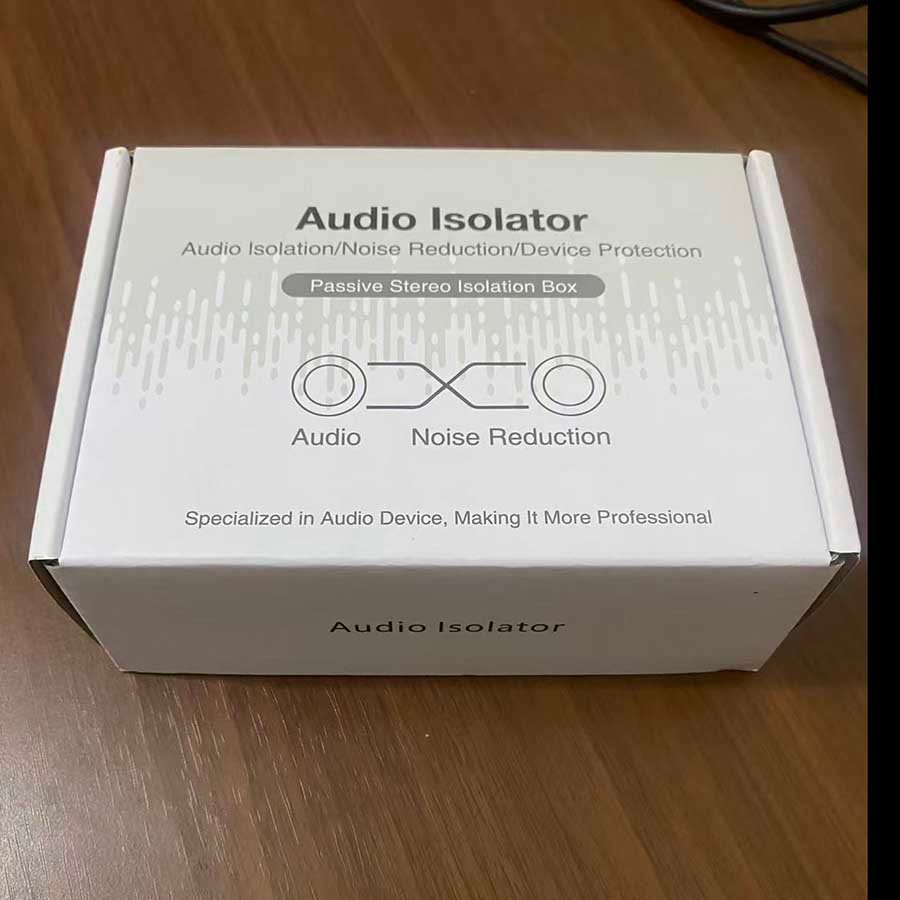
Engineered for ultra-clear audio fidelity and heavy stage abuse, the FS-ELEC PRO MAX2 delivers absolute noise isolation without sacrificing dynamic guitar feel or frequency response:
- 20Hz – 25kHz Flat Frequency Response (±0.2 dB): High-inductance nickel-core transformers pass the full sonic spectrum without high-end “tone suck” or low-end phase smear, keeping your cleans sparkling and your high-gain chugs tight.
- 1500V Galvanic Line Isolation: Complete electrical separation between dual amplifiers or pedalboard FX loops, eliminating 60Hz AC hum, digital switching hash, and wireless receiver noise.
- Essential -15dB PAD Attenuation Switch: High-output preamp feeds, line-level FX loops, or active guitar pickups can sometimes overdrive downstream inputs. Engaging the -15dB PAD prevents input stage clipping while preserving clean headroom.
- Universal 6.35mm (1/4″), XLR & RCA Matrix I/O:
- Native 6.35mm TRS/TS inputs and outputs plug directly into standard guitar patch cables, pedalboards, and amp FX loops.
- XLR outputs allow direct connection to audio interfaces, stage DI boxes, or cabinet emulators for silent recording.
- Pro Ground Lift Switch: Offers instant, safe shield disconnection at the flick of a switch to terminate ground loops instantly without risking electrical safety.
- Heavy-Duty Shielded Steel Chassis (470g): Industrial steel enclosure acts as a Faraday cage, shielding internal coils against high electromagnetic interference (EMI) from stage lighting rigs, amp power transformers, and neon signs.
Summary Checklist for Silent Guitar Rigs
- Never use 3-to-2 prong cheater plugs or cut AC earth ground pins on tube amplifiers.
- Power digital pedals with an isolated power supply (isolated DC outputs).
- Place a dual-channel passive isolator like the FS-ELEC PRO MAX2 on the second amp line or FX loop return to permanently eliminate dual-amp ground loop hum.
Frequently Ask Question:
A: Both amplifiers connect to AC earth ground. Connecting their input jacks with a standard instrument cable creates a ground loop, inducing 60Hz AC hum into your signal.
A: No! Lifting AC ground on a tube amp creates a dangerous electrocution risk. If an internal component short-circuits, high voltage energizes the guitar strings and chassis.