
Upgrading your vehicle’s sound system with an aftermarket head unit, multi-channel power amplifier, digital signal processor (DSP), or active subwoofer should deliver punchy bass and crystal-clear high end. But all too often, the moment you turn the key in the ignition, an annoying high-pitched whining noise that changes pitch as you press the gas pedal—or a constant low-frequency buzzing hum—comes roaring through your speakers.
This high-pitched, engine-synced pitch change is classic alternator whine, caused by a ground loop in your vehicle’s 12V DC electrical system.
As an audio and automotive electronics engineer with 20 years of experience in custom vehicle AV installations, I can tell you that car audio ground loops are among the most common technical headaches in aftermarket builds. Because cars use the metal chassis as a shared electrical ground return for everything from the alternator to the fuel pump, audio signal cables easily pick up dirty electrical current.
Here is why vehicle sound systems develop ground loop noise and alternator whine, and how to eliminate it permanently without degrading your audio quality.
The Anatomy of Vehicle Ground Loops & Alternator Whine
To understand why car audio hums or whines, you must look at how power and ground are distributed throughout a vehicle.
┌──────────────────────────────────────────────────────────┐
│                    12V Battery / Chassis                 │
└───────────┬──────────────────────────────────┬───────────┘
            │ (Dash Ground)                    │ (Trunk Ground)
            ▼                                  ▼
┌───────────────────────┐            ┌───────────────────────┐
│ Head Unit / DSP       │            │ Aftermarket Amplifier │
└───────────┬───────────┘            └───────────┬───────────┘
            │                                    │
            └────────► [ RCA Audio Cable ] ──────┘
                       (Ground Loop Path)
1. Ground Potential Delta Between Dash & Trunk
Your head unit or factory screen integration module is usually grounded under the dashboard (Ground Point A). Your heavy-duty aftermarket power amplifier is typically grounded to the vehicle chassis in the trunk or under a seat (Ground Point B).
Because different parts of a vehicle chassis carry slight variations in resistance, a ground potential voltage difference exists between the dash and the trunk ground points.
2. Alternator Diode Ripple & EMI
When the engine runs, the alternator generates AC power, which internal diodes convert into 12V DC to charge the battery and power the vehicle. This AC-to-DC conversion is not 100% smooth—it leaves a small residual AC ripple (electrical noise).
As the engine revs, the alternator spins faster, increasing the frequency of this AC ripple.
3. RCA Shield Signal Pollution
When you run RCA audio interconnects from the head unit to the amplifier, the dirty ground current flowing between Ground Point A and Ground Point B uses the RCA cable’s copper shield wire as a path of least resistance. The amplifier’s input stage detects this current and amplifies it, creating the infamous alternator whine that rises and falls with engine RPM.
Step-by-Step Car Audio Noise Diagnostics
Before tearing apart your dashboard or running new power wires, follow this diagnostic sequence:
Step 1: The Engine RPM Pitch Test
Start your engine and lightly press the gas pedal in park.
- If the whine increases in pitch as RPMs rise: The noise is alternator diode ripple entering through a ground loop or unshielded RCA cable.
- If the noise remains a steady 60Hz/120Hz hum regardless of engine speed: The ground loop is static, caused by a poor chassis ground connection on the amplifier or head unit.
Step 2: The Muted RCA Input Test
Disconnect the RCA signal cables from the amplifier inputs while keeping the amplifier powered ON and connected to the speakers.
- If the whine stops completely: The amplifier and speaker wiring are clean. The ground loop is entering via the RCA audio lines from the head unit or DSP.
- If the whine continues: The amplifier itself has a bad chassis ground, or power cables running parallel to speaker wires are inducting noise directly into the speaker lines.
Why Cheap RCA Noise Filters Fail in Vehicle Setups
Car owners often try fixing alternator whine with cheap $5-$10 plastic inline RCA noise filters from auto parts stores. However, consumer-grade filters introduce severe audio degradation:
- Sub-Bass Loss & Core Saturation: Cheap filters use tiny transformer cores that saturate under low-frequency bass signals. This rolls off deep sub-bass below 60Hz, leaving your subwoofers sounding weak, muddy, and thin.
- High-Frequency Phase Distortion: Poorly wound transformers mangle delicate high frequencies, dulling vocal clarity and cymbal crispness.
- Low Signal Headroom: High-output head units (4V–5V pre-outs) or aftermarket DSPs easily overload cheap filters, causing harsh harmonic clipping on loud music passages.
The Permanent Solution: True Galvanic Line Isolation
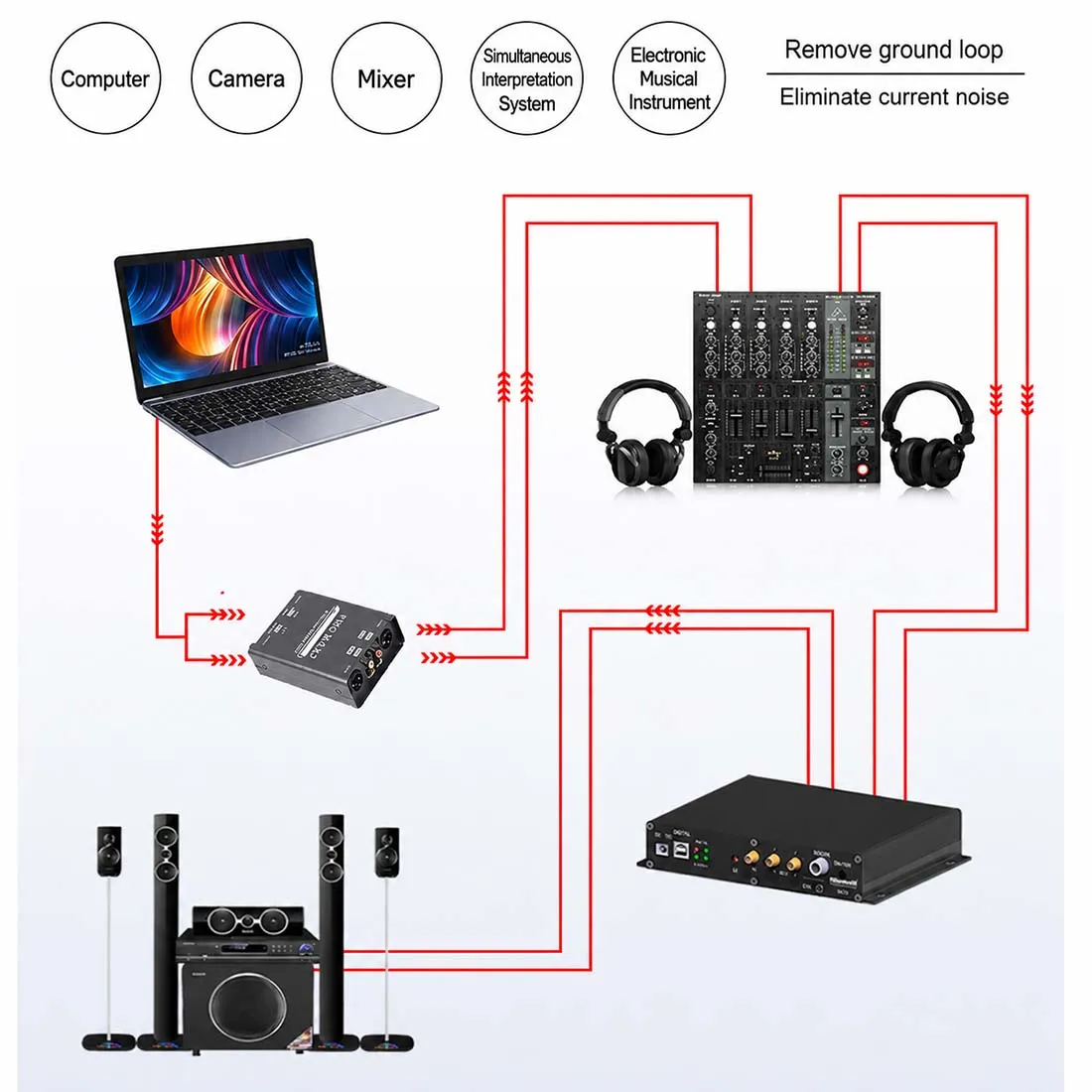
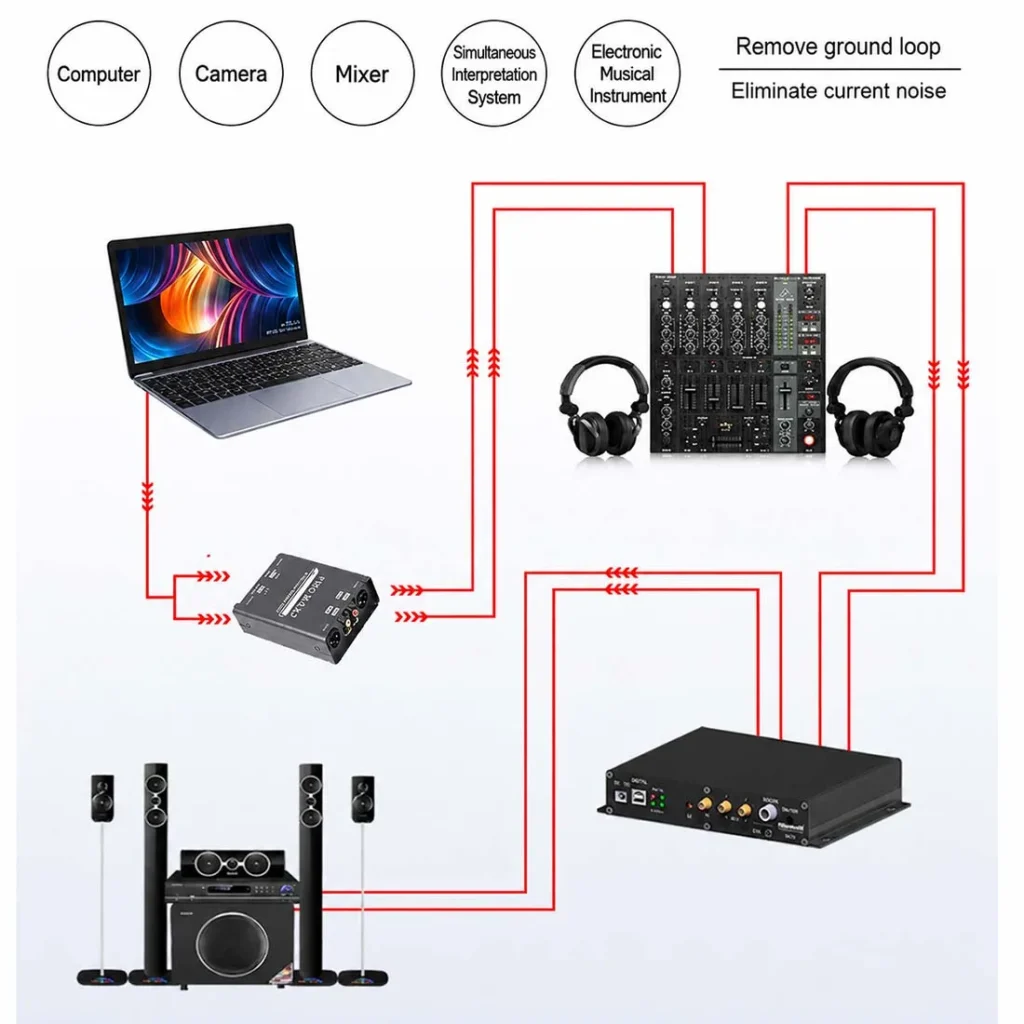
The most effective, permanent way to eliminate car audio ground loops and alternator whine is to insert a passive 1:1 line isolator with custom high-headroom transformers between the head unit/DSP outputs and the amplifier inputs.
This physically severs the copper shield connection between the dashboard and trunk grounds, allowing audio to transfer magnetically without carrying dirty 12V ground currents.
[ Head Unit / DSP (Dash) ]
            │ (RCA Line Output)
            ▼
[ FS-ELEC PRO MAX2 Ground Isolator ] ──► (Physical Galvanic Break + Ground Lift)
            │ (RCA Line Output)
            ▼
[ Power Amplifier (Trunk) ] =======> Silent, Crystal-Clear Vehicle Audio!
Why the FS-ELEC PRO MAX2 is Built for Custom Car Audio Builds
Whether you are building a competition-grade SQL vehicle, an overland rig with multiple battery banks, or a daily driver with an active subwoofer, the FS-ELEC PRO MAX2 delivers uncompromised isolation and audio fidelity:
- 20Hz – 25kHz Flat Frequency Response (±0.2 dB): High-inductance nickel-core transformers ensure full sub-bass reproduction down to 20Hz without bass roll-off, keeping your subwoofers hitting hard and deep.
- Universal RCA & Matrix Connectivity: Native RCA inputs and outputs seamlessly integrate into high-end head units (Alpine, Pioneer, Sony, Kenwood), factory line-out converters (LOCs), and aftermarket DSPs.
- Essential -15dB PAD Attenuation Switch: Aftermarket DSPs or high-voltage pre-amp line drivers (4V–8V) can sometimes overwhelm amplifier input gain stages. Engaging the -15dB PAD provides clean level matching, preventing clipping distortion and reducing residual system floor noise.
- 1500V Galvanic Isolation: High-isolation transformers completely isolate dash and trunk grounds, blocking alternator diode ripple, fuel pump buzz, and ignition system EMI.
- Heavy-Duty Shielded Steel Housing (470g): Unlike plastic automotive noise filters, the PRO MAX2’s industrial steel chassis blocks electromagnetic radiation from high-current vehicle wiring harnesses and ECU modules.
- Pro Ground Lift Switch: Offers instant, safe shield disconnection at the flick of a switch to terminate ground loops instantly.
Summary Checklist for Quiet Car Audio
- Ensure your power amplifier’s ground wire is short (under 3 feet), securely bolted to bare, unpainted metal on the vehicle chassis.
- Never run RCA audio cables parallel to thick 12V power wires down the same side of the vehicle.
- Install a dedicated passive ground isolator like the FS-ELEC PRO MAX2 on RCA line feeds between the head unit/DSP and power amplifier to permanently eliminate alternator whine and 12V ground loops.
Frequently Ask Question:
A: This is alternator whine. As engine RPM rises, alternator AC ripple frequency increases, traveling down dirty RCA ground shields to your amplifier.
A: Cheap isolators do because small transformers saturate on low frequencies. High-end isolators like the PRO MAX2 maintain a flat 20Hz response to preserve full sub-bass output.